
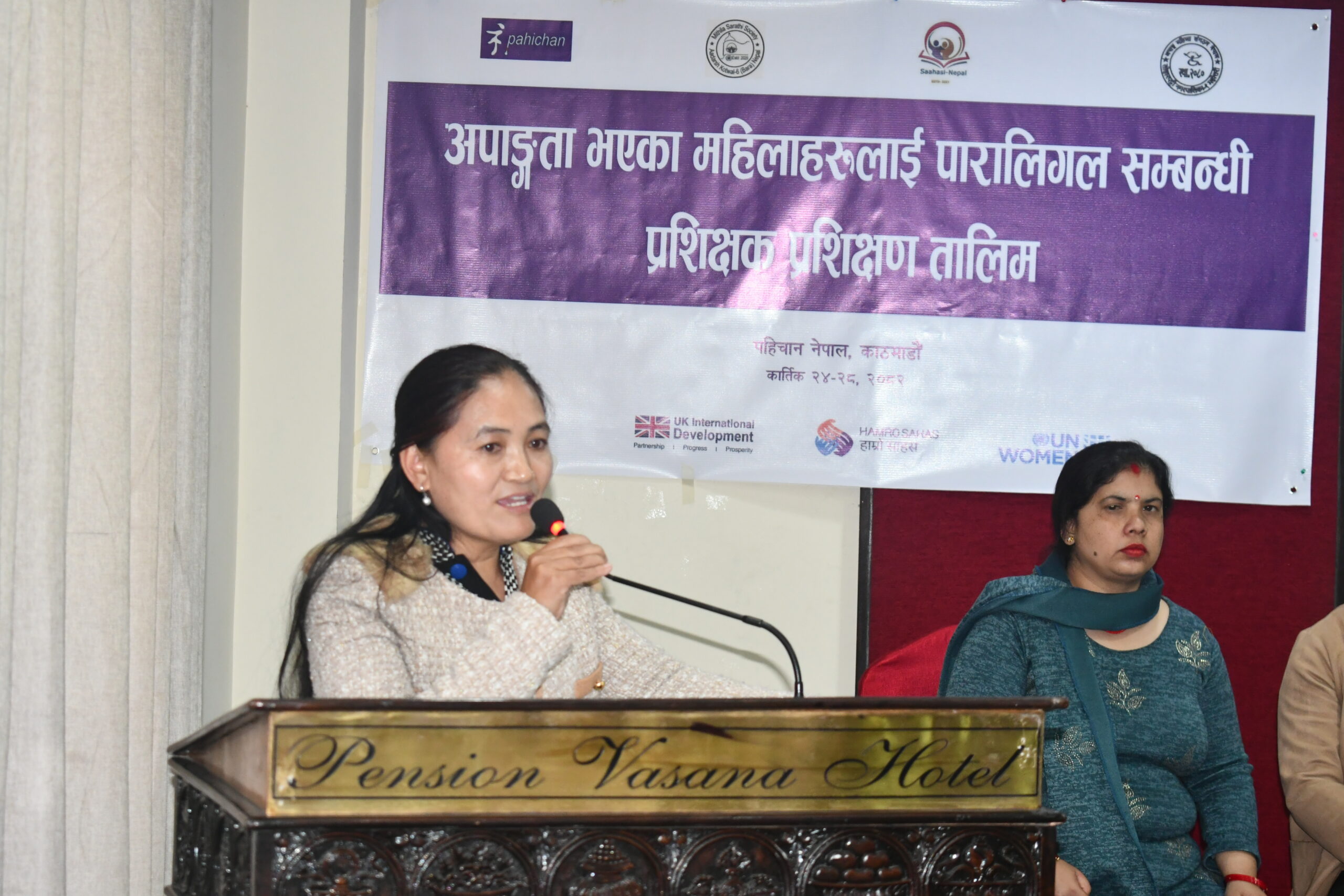
Pahichan Nepal successfully conducted a Paralegal Trainers’ Training (Training of Trainers – ToT) for women with disabilities and members of Paralegal Committees. The five-day training was held from 7–11 November 2025 (24–28 Kartik 2082) at Pension Basana Hotel, Kathmandu.
Objective of the Training
The main objective of the training was to enhance participants’ legal knowledge, understanding of human rights, gender and gender-based violence, and to strengthen their capacity to access justice and conduct advocacy. The training also aimed to prepare participants to serve as paralegal trainers at the community level.
Training Structure and Key Topics
The training combined theoretical knowledge with practical skills using participatory and inclusive learning approaches. Key topics covered during the training included:
Introduction to gender and gender identity
Gender, sexuality, and gender-based violence
Intersectionality
Human rights and the rights of persons with disabilities
Access to justice for persons with disabilities
Role, duties, and rights of paralegals
Professional skills and facilitation techniques
Networking and coordination
Introduction to advocacy and advocacy strategies
Coordination with local judicial committees, police offices, and courts
Legal remedies, justice system structures, and complaint procedures
Training Methodology
To ensure effective learning, various participatory methods were used, including presentations, group work, games, case studies, role-plays, discussions, pre-tests, and post-tests.
Resource Persons
The sessions were facilitated by experienced senior advocates and legal practitioners, who shared practical legal knowledge and real-life experiences, making the training highly interactive and applicable.
Conclusion
The training concluded with a final assessment, certificate distribution, and closing session. Participants shared positive feedback, highlighting the training as empowering, practical, and highly relevant to their community work.
Pahichan Nepal remains committed to continuing such initiatives to strengthen access to justice, rights protection, and advocacy for women with disabilities and other marginalized communities.